


Balacing safety, efficiency and performance
Emergency backup cooling with liquid nitrogen
Liquid nitrogen or liquid air can be deployed as an emergency or backup cooling medium, injected directly into heat exchangers for instant cooling.
At −196 °C, liquid nitrogen delivers an exceptionally high cooling capacity per unit volume, making it ideal for rapid temperature suppression during overheating events.
Critically, LN₂ cooling does not require electricity at the point of use. In power‑loss scenarios, grid failures, or cooling system faults, liquid nitrogen can maintain safe operating temperatures long enough to enable controlled shutdowns or system recovery. This capability is increasingly valuable as data centres contend with grid congestion, extreme weather, and higher uptime expectations.
Liquid nitrogen is also non‑flammable, inert, and leaves no residue, making it safe for use around sensitive IT equipment when properly engineered. It is already widely used across healthcare, electronics manufacturing, and research environments, providing a mature safety and handling framework.
The benefits of liquid nitrogen cooling
- Instant cooling response for thermal spikes and failure scenarios
- Energy‑independent operation, ensuring protection during power outages
- Reduced reliance on oversizing mechanical cooling systems
- No water consumption, supporting sustainability and drought resilience
- Scalable deployment, from single rooms to hyperscale facilities.
Experts agree that future data center cooling will likely be hybrid in nature, combining multiple approaches to balance efficiency, reliability, and cost. Liquid nitrogen fits squarely into this hybrid model as a robust fallback and peak‑load solution.
Noblegen LN2 generators for data center applications
Noblegen’s on‑site liquid nitrogen generators are purpose‑built for industrial and infrastructure applications where reliability and safety are non‑negotiable. For data center applications, our robust and reliable Titan LN₂ generation units provide a dependable source of liquid nitrogen without the logistical complexity of bulk deliveries.
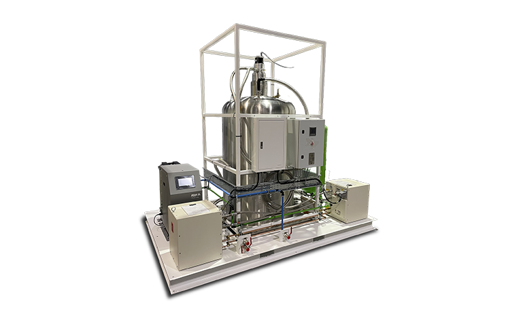
Noblegen generators are:
- Convenient: on‑site generation eliminates supply interruptions
- Safe: engineered for controlled operation
- Compact and modular: easy to integrate into existing facilities
- Low maintenance: designed for continuous, unattended service.
Conclusion
By pairing conventional cooling infrastructure with on‑site LN₂ generation, data‑centre operators gain an additional layer of thermal insurance, protecting uptime, equipment, and revenue in an increasingly demanding operating environment.