


What is sample storage?
Sample storage refers to the controlled preservation of biological or chemical materials in conditions that protect their integrity. Depending on the nature of the material, storage may range from ambient temperature to deep‑freeze or cryogenic conditions. For sensitive biological samples such as cells, tissues, microorganisms, and genetic material, cryogenic sample storage is the gold standard. It provides long‑term stability by halting biochemical reactions, preventing ice crystal formation, and minimising thermal fluctuations.
Cooling systems for cryogenic samples
Cryogenic storage solutions rely on technologies capable of maintaining temperatures far below freezing. The main types of cooling systems include:
1. Mechanical Ultra‑Low Temperature Freezers
- Typically maintain –40°C to –86°C
- Suitable for many biological materials but not for long‑term viability of cells or tissues
- Operate using compressors and refrigerants
2. Cryogenic Freezers (–150°C and below)
- Often used for medium‑term cell preservation
- Rely on advanced refrigeration systems or hybrid cooling mechanisms
- Provide more stability than traditional ULT freezers
3. Liquid Nitrogen (LN₂) Systems — the Industry Standard
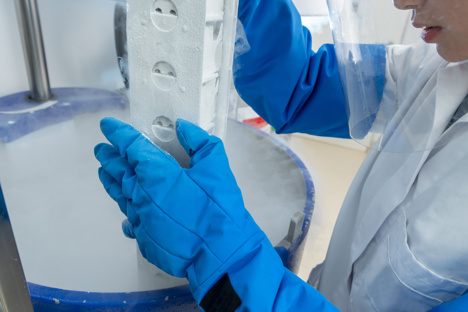
- Liquid nitrogen systems remain the most widely used solution for cryogenic sample storage because they achieve temperatures down to –196°C. Two configurations are commonly used:
Liquid Phase Storage:
- Samples are immersed directly in LN₂
- Provides the coldest, most consistent temperatures
- Higher contamination risk if vials are not fully sealed
Vapour Phase Storage:
- LN₂ sits at the bottom of the tank; samples sit above in super‑cooled vapour
- Achieves temps between –150°C and –190°C
- Greatly reduces contamination risks
- Now the preferred method for modern biobanks.
The benefits of using liquid nitrogen
Liquid nitrogen offers several advantages over other refrigerants:
Ultra‑Low Temperatures (–196°C):
Perfect for long‑term preservation of cells, tissues, and genetic materials.
Sample Integrity and Viability:
LN₂ maintains optimal cellular morphology, viability, and functionality for applications such as IVF, stem cell therapy, and clinical trials.
High Temperature Stability:
LN₂ systems maintain consistent conditions, even during power outages, because temperature is maintained by the physical properties of nitrogen rather than mechanical cooling.
Low Operating Costs:
Compared to mechanical freezers, LN₂ systems have fewer moving parts and lower energy demands.
Scalability:
From small benchtop dewars to large biobank storage tanks, LN₂ solutions can scale with demand.
Automated sample storage systems
Modern laboratories increasingly rely on automated cryogenic storage for:
- Improved traceability through barcoding and RFID tracking
- Reduced sample handling, lowering contamination and human error
- Optimised inventory workflows with digital sample management software
- Enhanced safety by limiting operator interaction with ultra‑cold environments
Automated LN₂ systems combine robotics with vapour‑phase cryogenic storage to create fully traceable, GMP‑compliant environments ideal for large‑scale biobanking and high‑value research.
Other refrigeration applications
Cryogenics is only a part of a broader temperature-controlled ecosystem supporting research and pharmaceutical production workflows. Beyond cryogenic storage, laboratories can use a variety of systems depending on the type of samples, for example:
- Enzymes, reagents get refrigerated at 2-8°C
- Freezers set to -20 to -40 °C store chemicals, plasma, short-term samples
- ULT freezers can store RNA, DNA, proteins for longer term
- Controlled-rate freezers protect cells during the freezing process before cryogenic storage.
Conclusion
Cryogenic sample storage plays a vital role in safeguarding biological and chemical materials used in research, medicine, and industry. With liquid nitrogen technology at its core, cryogenic systems offer unmatched temperature stability, long‑term viability, and operational reliability. Whether paired with manual LN₂ top-ups or automated systems, cryogenic storage continues to be the most dependable solution for preserving high‑value samples.