


Safety challenges of delivered liquid nitrogen
Liquid nitrogen’s physical properties make it incredibly useful, but these same properties introduce hazards during storage, transport, and handling:
The temperature - liquid nitrogen boils at –196°C. This means that upon contact with skin tissue, it can quickly cause immediate frostbite and tissue damage.
Although extremely cold temperatures are beneficial in controlled dermatology applications, they pose risks for anyone handling or moving LN₂ dewars.
Vaporization - liquid nitrogen can quickly evaporate and replace oxygen. Even small amounts of liquid vaporize at a fast rate, creating large amounts of gas through expansion (liquid nitrogen expands up to 700 times its liquid volume when it vaporizes).
Even small spills create large quantities of nitrogen gas that can:
- Displace oxygen in enclosed areas
- Create an asphyxiation hazard
- Increase internal tank pressure, potentially causing ruptures or explosions if not vented properly
Because nitrogen is odourless and colourless, people may not recognise danger until it's too late and the symptoms of oxygen depletion occur.
Transportation risks
Moving dewars through buildings or across sites introduces additional safety risks:
Spillage & Ventilation
Transporting dewars through car parks, corridors, stairways, lifts, or escalators heightens the chance of a spill. Poorly ventilated environments, such as high‑rise buildings or confined internal hallways make oxygen displacement more dangerous and hard to detect.
Public Interaction
Dewars should be handled by at least two trained staff, following clear routes away from public areas - which might not always be possible. Any accidental release in public spaces can lead to injuries, panic, or oxygen‑poor atmospheres leading to injury.
Equipment Hazards
Direct contact with liquid nitrogen or cold surfaces can cause severe burns. Damaged or improperly sealed dewars may also experience pressure build‑up, increasing the risk of explosions.
How common are LN2-related injuries?
US data from the OSHA and CSB indicate that liquid nitrogen incidents are relatively rare (and not easy to track since there isn't a comprehensive number for all liquid nitrogen incidents), but are often severe when they do occur.
Many incidents involve damaged equipment causing tanks to overflow, but spillages are also common. Fatalities frequently happen when untrained people enter an oxygen‑deficient environment without monitoring equipment to rescue others. Because LN₂ is invisible and odourless, victims often have no warning before losing consciousness.
In short: while incidents are rare, they are very serious.
What makes on-site generators safer?
Reduced amount of handling: simply put, using a generator greatly reduces all handling risks associated with having to transport liquid nitrogen dewars to the point of use. Most facilities go through this process regularly and have to mitigate the risks, ensuring employees are safeguarded with appropriate PPE and following the correct procedures. Even if all guidelines are followed, the chances of a human error or equipment failure are still present. This single shift removes the majority of injury risk caused by manual handling and boil-off during transportation.
Continuous monitoring: advanced liquid nitrogen generators, including those by Noblegen, automatically fill dewars to the required levels. To prevent overfilling, a smart level sensor monitors liquid levels.
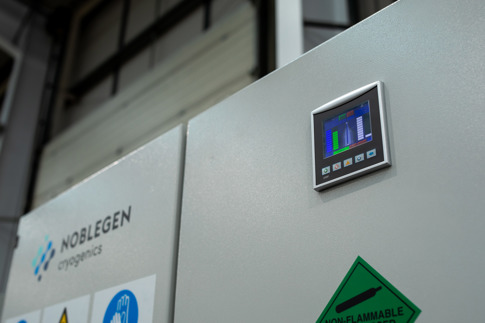
Live system display: key information like pressure, liquid level, purity and cooling rates are always available, real-time. Any issues will stop production and display an error sign, preventing hazards from escalating.
No bulk storage: Using a generator reduces bulk storage, which eliminates the risk of sudden, massive release of nitrogen gas in large amounts.
Safe dispensing: Noblegen generators come with a safe hose or flask dispense system, ensuring that only the required amount of liquid nitrogen is administered. An emergency stop button provides an extra layer of protection.
Conclusion
By generating liquid nitrogen directly at the point of use, facilities benefit from a safer working environment, less manual handling, and continuous oversight of their supply. Eliminating delivery‑related transportation risks creates a more reliable and predictable source of liquid nitrogen.