


What are cryogenic freezers?
Cryogenic freezers are specialized cooling devices that use liquefied gases, commonly liquid nitrogen, to reach ultra-low cryogenic temperatures below -150 °C (-238 °F).
In most cases, biological materials are kept in cryogenic freezers, such as tissues, organs, cell lines, and reproductive materials, in healthcare, research and biotechnology markets. They are also used in the food industry, due to their ability to freeze food products up to five times faster than conventional systems.
Because products pass through the temperature danger zone quickly, cryogenic freezing is especially valuable for premium foods where maintaining freshness and product integrity is essential.
What gets stored in cryogenic freezers?
Most commonly, biological samples and materials get stored in cryogenic freezers. These can include:
- Embryos and oocytes, stored for fertility treatments
- Sperm kept in sperm banks for long-term preservation
- Stem cells and bone marrow, used for regenerative medicine and transplant therapies
- DNA, RNA, nucleic acids, used in biotechnology and research
- Tissue samples and organs kept in biobanks for medical use.
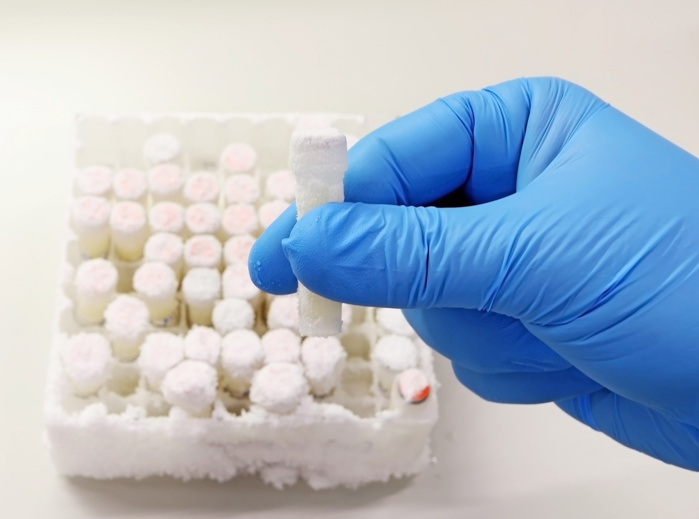
Cryogenic temperatures ensure all metabolic and enzymatic reactions are halted
In industrial and commercial applications, components are often treated at cryogenic temperatures, while food products are preserved using cryogenic freezers to maintain the quality and freshness of high-value items.
Why store samples below -135°C?
Temperature control is vital for preserving the quality of samples, preventing degradation and ensuring their future use. Cryogenic freezers using liquid nitrogen must maintain temperatures below -135°C because this is the glass transition temperature of intracellular solutions and biological materials (approximately -130°C to -135°C). Falling below this threshold, water transitions into an amorphous state without forming destructive ice crystals, which prevents the mechanical piercing of cell membranes and protects structural viability.
Mechanical freezers vs. cryogenic freezers
Mechanical freezers and cryogenic freezers serve different storage requirements. Mechanical freezers use compressors and refrigeration systems to maintain temperatures typically between -30°C and -80°C (-22°F to -112°F), making them well suited for applications where samples require frequent access and routine handling.
Cryogenic freezers, by contrast, use cryogenic liquids such as liquid nitrogen to achieve temperatures below -150°C, with storage temperatures reaching as low as -196°C. These ultra-low temperatures are essential for the long-term preservation of biological materials, including cells, tissues, embryos, and stem cells, where maintaining viability is critical.
In addition to achieving significantly lower temperatures, cryogenic freezers provide much faster cooling rates than conventional refrigeration systems. They often incorporate advanced vacuum insulation, multi-layer thermal protection, and specialized storage systems to minimize heat ingress, maximize storage capacity, and maintain stable cryogenic conditions for valuable samples.
What are the benefits of cryogenic freezers?
- Biological samples can remain viable for decades when maintained at cryogenic temperatures.
- The freezer's rapid cooling reduces the formation of ice crystals that can damage cells and tissues.
- Liquid nitrogen naturally maintains temperatures around -196°C, providing highly consistent storage conditions.
- Unlike mechanical freezers, cryogenic systems can continue maintaining temperatures without electrical refrigeration for extended periods.
- Modern cryogenic vessels maximize storage capacity while minimizing floor space requirements.
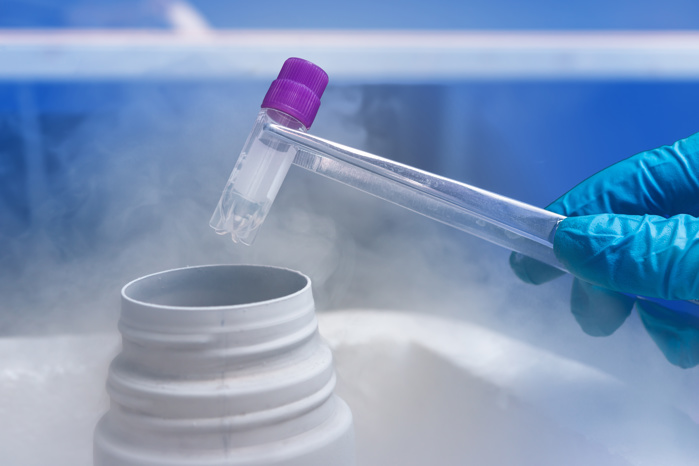
Cryogenic sample storage is common in the pharmaceutical and biotechnology industries
The role of liquid nitrogen in cryogenic freezing
Liquid nitrogen can be used in direct immersion, in its liquid phase, or in vapor phase in its gaseous phase.
Vapor-phase systems typically stablize at temperatures between -150°C and -190°C, while direct liquid storage reaches down to 196°C.
Liquid-phase storage
Direct submersion in liquid phase offers the coldest and most stable temperatures. However, it does carry the risk of carrying contaminants between containers, as demonstrated by an acute hepatitis B outbreak in 1995, which was traced back to a cryopreservation tank used to store bone marrow and peripheral-blood stem cells. Liquid-phase offers maximum stability at ultra-low temperatures and rapid cooling.
Vapor-phase storage
In vapor-phase freezer systems, samples are suspended in the cold nitrogen gas above the liquid nitrogen surface at the bottom of the tank. Temperatures stay the coldest near the base and can shift slightly toward the top, though modern vacuum-insulated vessels minimize this gradient.
This set-up avoids direct contact with liquid and reduces cross-contamination risks. For this reason, vapor-phase is favored for clinical and cell therapy applications, where safety is critical.
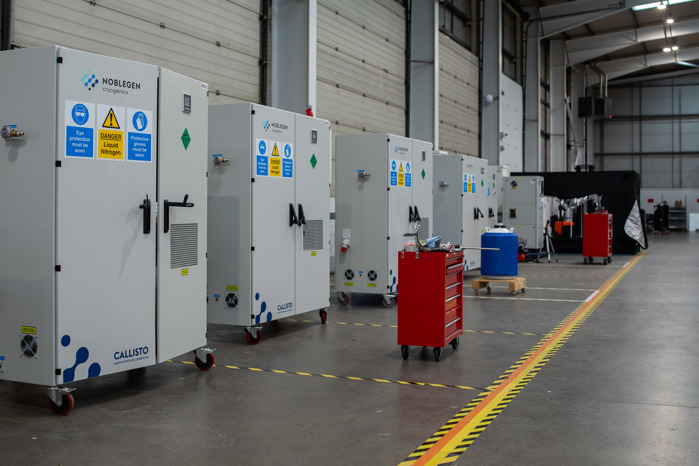
Liquid nitrogen generators ensure LN2 security without dependency on external suppliers
Need a reliable liquid nitrogen supply for your cryogenic freezer?
Whether you're storing embryos, stem cells, tissue samples, or other valuable biological materials, maintaining consistent cryogenic temperatures depends on a dependable liquid nitrogen supply. Contact us to explore how on-site liquid nitrogen generation can help improve supply security, reduce reliance on deliveries, and support long-term cryogenic storage applications.